


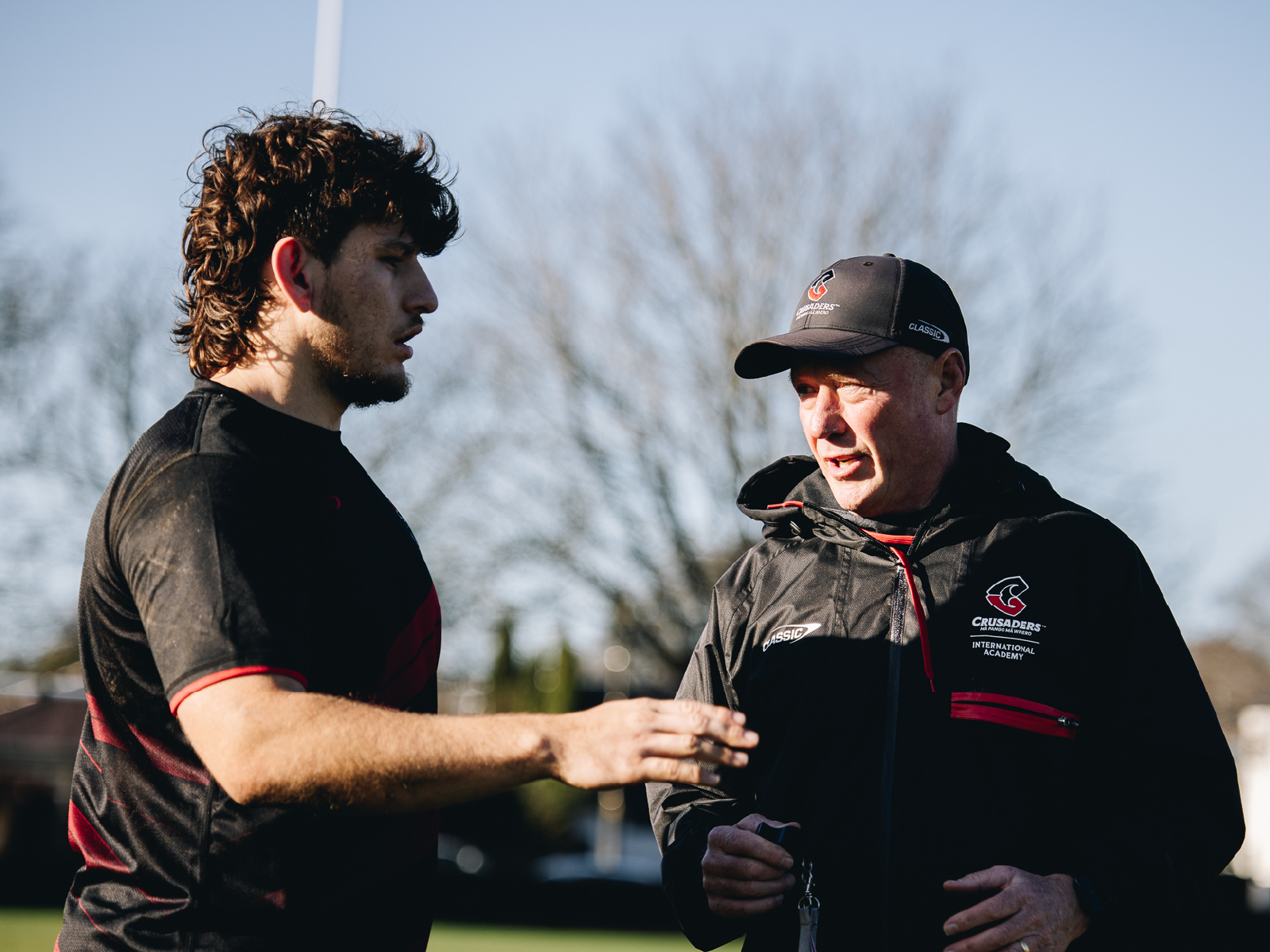
Stepping into a professional franchise training camp is a different world from club or school rugby. It's where raw talent gets shaped into elite performance, not just through harder training, but through a completely different way of thinking about the game. At Crusaders Global Academy, this philosophy is built directly into the program's mission: to improve players' skillsets, raise their rugby IQ, and help players and coaches understand what makes the Crusaders environment so special. Here's what that actually looks like in practice.
1. Technical Precision Under Pressure
At the school and club level, players often get away with rough technique if their athleticism carries them. At a franchise camp, coaches drill the fundamentals relentlessly: tackle technique, ruck body position, passing under fatigue, kicking accuracy. This happens because at the professional level, small technical errors get exposed and punished. Players learn that "good enough" isn't good enough; every skill gets refined to withstand contact, speed, and pressure. This is exactly the kind of skillset sharpening CGA points to as central to its programme.
2. Tactical and Game-Understanding Depth
Professional camps go far beyond "run this play." Players are taught to read defensive shapes, understand attacking structures, and make split-second decisions based on space and numbers. At Crusaders Global Academy, players get to witness the Crusaders working through their training week in preparation for their upcoming match, giving them a first-hand look at how a championship-level side actually thinks the game through, not just how it plays it. Video analysis becomes a daily habit, not an occasional review, and athletes start thinking like coaches rather than just executing instructions.
3. Physical Conditioning Built for Longevity
Strength and conditioning at this level isn't about looking good in the gym. It's about building a body that can survive a season of collisions. Players learn periodization, injury prevention, and recovery science. CGA folds this directly into its off-field curriculum, combining on-field skills with off-field support in areas such as nutrition, hydration, sleep, and individual development preparation. Many players leave with a completely new understanding of how these factors affect performance and career longevity, not just for one camp but for a whole career.
4. Professional Habits and Discipline
This might be the biggest shift for young players. Franchise camps run on schedules, and being five minutes late isn't tolerated. Players learn punctuality, accountability, and the day-to-day discipline that separates a hobbyist from a professional. This ties into what many describe simply as learning "the Crusaders Way," the day-to-day standards and habits that underpin the franchise's success both on and off the field.
5. Mental Resilience and Feedback Culture
Coaches at this level give direct, sometimes blunt feedback, and expect players to respond constructively rather than defensively. Camps teach athletes how to handle setbacks, whether it's a dropped ball in front of scouts or competition for a starting spot, as information rather than identity threats. At CGA, this feedback often comes from people who have lived it themselves: the coaching roster has included current Crusaders coaches alongside legends of the game, giving players access to perspective built from real professional experience.
6. Nutrition and Recovery as Performance Tools
Players are educated on fueling for training loads, managing body composition, and using recovery tools intentionally rather than casually. Many leave camp with a completely restructured relationship with food and rest, seeing both as training inputs rather than afterthoughts, reflecting CGA's own emphasis on individual development preparation as a core pillar of the programme.
7. Leadership and Communication on the Field
Professional environments demand constant communication: calling plays, organizing defensive lines, holding teammates accountable mid-game. Camps put players in high-pressure scenarios specifically to develop these leadership instincts. This aligns closely with CGA's broader goal of developing not just players but coaches too, building a pipeline of people who can lead a team, not just play on one.
8. Navigating Competition and a Global Rugby Community
Franchise camps put talented players from different backgrounds in direct competition for limited spots, a very different dynamic from a school team. Athletes learn how to compete hard while still supporting team culture. This mirrors Crusaders Global Academy's own founding purpose. Since its start in 2008, the Academy has grown into a hub for elite player and coach development, having hosted over 1,500 players and coaches and impacted 52 rugby clubs globally. Players training there aren't just improving individually, they're joining a genuinely international rugby community built around a shared standard.
The takeaway: a professional franchise training camp isn't just about getting fitter or faster. It's an immersion into the full identity of a professional athlete: technical mastery, tactical intelligence, physical science, mental resilience, and professional habits, all reinforced daily. Crusaders Global Academy builds its entire programme around this idea, aiming not only to sharpen individual players but to grow rugby's standard worldwide. For young players stepping up from academy or school rugby, it's often the moment where the game "clicks" in a completely new way.
Ready to Train Like a Crusader?
Crusaders Global Academy offers player and coach development programmes both onsite in Christchurch, New Zealand and remotely through partner organizations around the world. Whether you're an aspiring professional looking to sharpen your skillset and rugby IQ, or a coach wanting to learn the systems behind one of the most successful franchises in the game, there's a pathway built for you.
Explore CGA's training programmes and find the one that fits your goals.
.png)